Five planets nobody had to discover
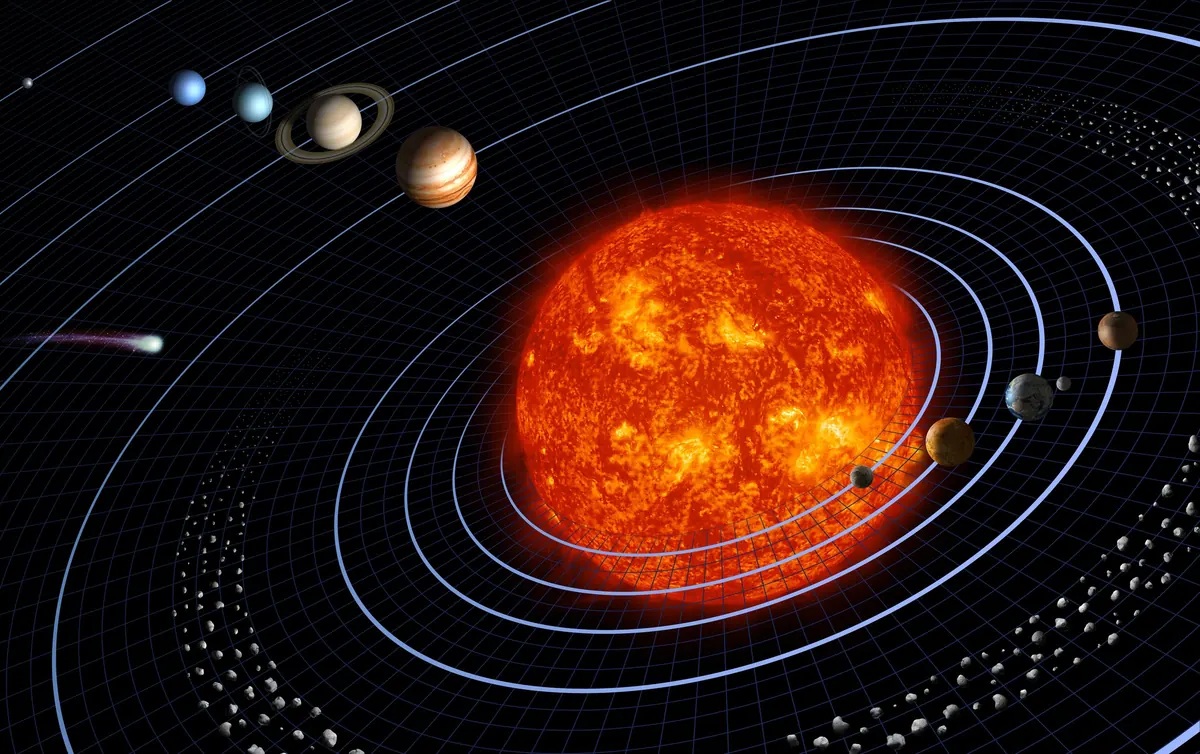
The word planet comes from a Greek word for wanderer, and the first five wanderers were the ones bright enough to follow by eye: Mercury, Venus, Mars, Jupiter and Saturn. Ancient observers saw them drift against the fixed stars and gave them names. Nobody knew they were worlds. Five of the eight planets in the order above were known this way, and Earth, the one we stand on, is the sixth.
The rest of the list was found with instruments. William Herschel spotted Uranus on March 13, 1781, the first planet found with a telescope. Then came the surprise of Neptune, in 1846: nobody saw it first. Urbain Le Verrier calculated where an unseen planet must be, to explain wobbles in Uranus's orbit, and Johann Galle found it that year at the Berlin Observatory, close to the predicted position.
The planets in order
| Order | World | Kind | Distance (million km) | Distance (AU) | Sunlight takes |
|---|---|---|---|---|---|
| 1 | Mercury | Rocky planet | 58 | 0.39 | 3.2 minutes |
| 2 | Venus | Rocky planet | 108 | 0.72 | 6.0 minutes |
| 3 | Earth | Rocky planet | 150 | 1.00 | 8.3 minutes |
| 4 | Mars | Rocky planet | 228 | 1.52 | 12.7 minutes |
| 5 | Jupiter | Gas giant | 778 | 5.20 | 43.3 minutes |
| 6 | Saturn | Gas giant | 1,432 | 9.57 | 1.3 hours |
| 7 | Uranus | Ice giant | 2,867 | 19.16 | 2.7 hours |
| 8 | Neptune | Ice giant | 4,515 | 30.18 | 4.2 hours |
| 9 | Pluto | Dwarf planet | 5,906 | 39.48 | 5.5 hours |
One AU is the average distance from Earth to the Sun, about 149.6 million kilometers. Pluto is a dwarf planet and is listed last for comparison. Figures are averages: Pluto's orbit is oval and sometimes carries it inside Neptune's.
A gap that predicted a world
Look at the distances and one gap stands out: Mars to Jupiter is 550 million km, far more than the step from Venus to Earth. In the 1700s a rule of thumb called the Titius-Bode law, published by Johann Bode in 1772, seemed to predict the spacing of the planets, and it demanded a missing planet near 2.8 AU, right in that gap. When Herschel's Uranus fell near the rule's next prediction, astronomers took it seriously and began a search.
Giuseppe Piazzi, working in Palermo, found a moving point of light on January 1, 1801, at about 2.77 AU. He took it for a comet at first. It was Ceres, the first asteroid ever found. It wasn't the planet the rule had asked for, and Neptune's discovery later broke the rule altogether. Ceres is now one of the dwarf planets, and the gap between Mars and Jupiter holds the main asteroid belt.
Rocky planets, gas giants and ice giants
The first four planets, Mercury, Venus, Earth and Mars, are the inner or terrestrial planets, and they have solid surfaces. Past Mars the planets have no hard surface. They're swirling gas above a core. Jupiter and Saturn are gas giants, and Uranus and Neptune are called ice giants because they hold more water, ammonia and methane ices below their gas. The two groups are separated by the asteroid belt, and the eight worlds divide as four small, dense rocky planets, then two enormous gas giants, then two cold, smaller ice giants.
The gaps keep growing
Each planet is usually farther from its neighbor than the last. Earth is only 41 million kilometers beyond Venus, but Neptune is 1,648 million kilometers beyond Uranus. That's why a spacecraft takes years to reach the outer planets. Voyager 2 flew past Uranus in 1986 and past Neptune in 1989, which no other spacecraft has repeated since. The Voyager 2 page tells the story.
Which ones can you see, and when
Order explains what you can see from Earth. Mercury and Venus orbit inside our path, so they never stray far from the Sun and are only visible low in the sky after sunset or before sunrise. Their widest separations from the Sun are on the pages for Venus and Mercury. The outer planets can sit opposite the Sun and shine all night. The dates for those are on the planet oppositions page.
Where Pluto fits
Pluto was the ninth planet from 1930 until 2006, when it was reclassified as a dwarf planet. Its path is long, oval and tilted. For about two decades of every 248, Pluto is closer to the Sun than Neptune is. That last happened from 1979 to 1999. Why Pluto isn't a planet explains the decision, and the Kuiper Belt beyond Neptune holds many worlds like it.
A way to remember the list
Schoolchildren learn the order from sentences in which each word starts with the letter of a planet, and the old versions needed a ninth word until 2006. The pattern behind the list is easier to remember than the list: four small rocky worlds, a belt of rubble, two big gas giants, two ice giants. The order is a fair summary of how the solar system formed, with the dense material close to the Sun and the light, icy material farther away.
How far each step is
Set the table of distances against a street and the gaps between planets keep widening. Earth is 1.00 AU from the Sun, Mars 1.52, Jupiter 5.20. The solar system scale model puts this on a street with one AU as one meter, and the outer planets end up a long walk apart. It's also why the order is usually drawn with the distances squashed.
Spacing by ratio
Another way to read the list is by ratio. From Earth outward, each planet sits between 1.4 and 3.4 times as far from the Sun as the one before it. That regularity is what the Titius-Bode rule tried to capture, and it fails at Neptune. The pattern is a useful reminder that planets don't form at random distances: they settle into orbits that keep a gap from their neighbors.
Questions people ask
What's the order of the planets from the Sun?
Mercury, Venus, Earth, Mars, Jupiter, Saturn, Uranus and Neptune. Pluto, a dwarf planet, orbits farther out on average.
Which planet is closest to the Sun?
Mercury, at an average of 58 million kilometers.
Which planet is farthest from the Sun?
Neptune is the farthest of the eight planets, at an average of 4,515 million kilometers.
Which planets were known to the ancients?
Five: Mercury, Venus, Mars, Jupiter and Saturn. They're bright enough to see without a telescope. Uranus was found in 1781 and Neptune in 1846.
Keep exploring
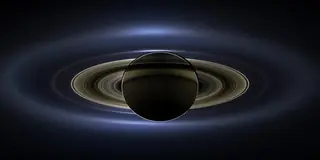 Distance of each planet from the SunDistance in miles, kilometers, AU and light time, plus the distance from Earth.
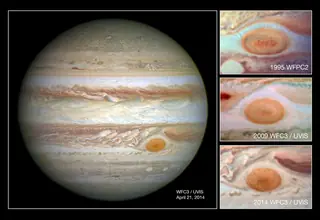 Planet sizes comparedEvery planet drawn to scale, with diameters next to Earth.
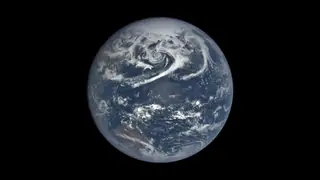 How long is a year on each planet?Orbit time for every planet, in Earth days and years.Solar system, shrunk to a streetOne AU as one meter.