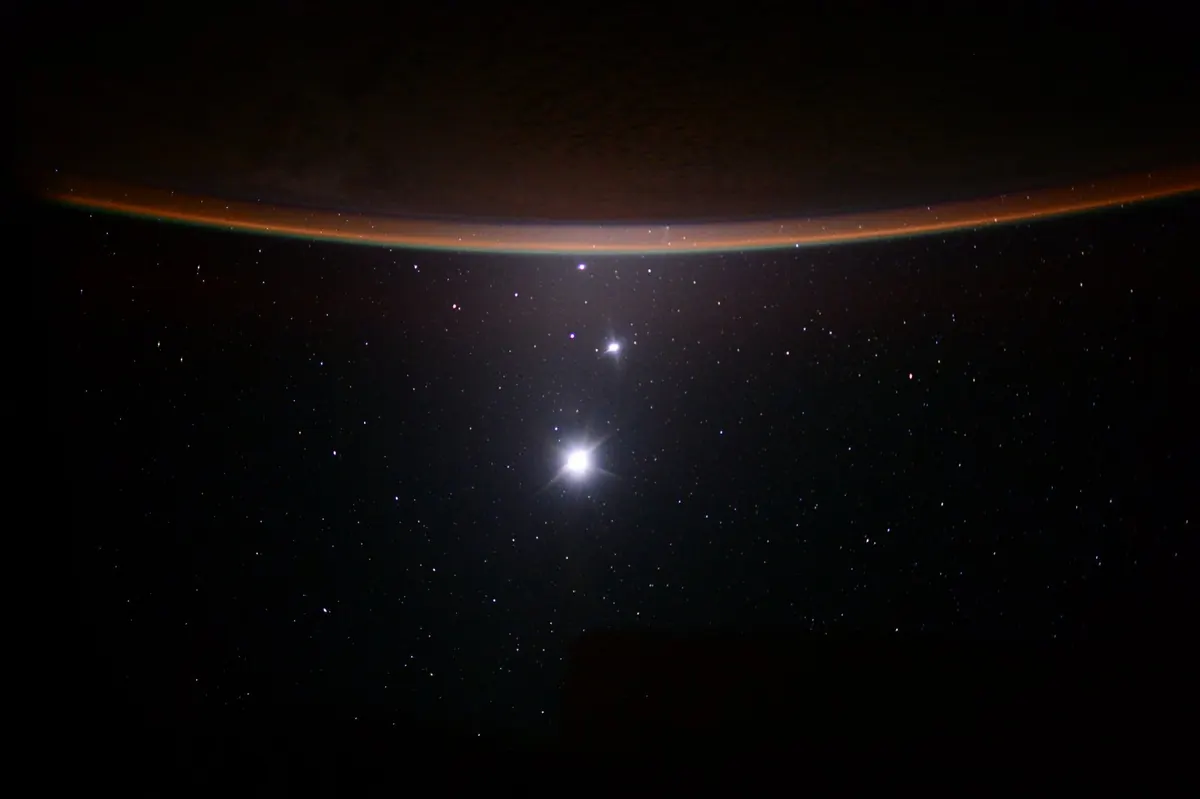
The next opposition of each planet
| Planet | Next opposition | Distance | Between oppositions |
|---|---|---|---|
| Mars | February 19, 2027 | 0.68 AU | 780 days |
| Jupiter | February 11, 2027 | 4.36 AU | 399 days |
| Saturn | October 18, 2027 | 8.35 AU | 378 days |
| Uranus | November 25, 2026 | 18.43 AU | 370 days |
| Neptune | September 28, 2027 | 28.86 AU | 368 days |
The next fourteen oppositions in order
| Date | Planet | Distance from Earth |
|---|---|---|
| November 25, 2026 | Uranus | 18.43 AU |
| February 11, 2027 | Jupiter | 4.36 AU |
| February 19, 2027 | Mars | 0.68 AU |
| September 28, 2027 | Neptune | 28.86 AU |
| October 18, 2027 | Saturn | 8.35 AU |
| November 30, 2027 | Uranus | 18.36 AU |
| March 12, 2028 | Jupiter | 4.44 AU |
| September 30, 2028 | Neptune | 28.85 AU |
| October 30, 2028 | Saturn | 8.25 AU |
| December 3, 2028 | Uranus | 18.29 AU |
| March 25, 2029 | Mars | 0.65 AU |
| April 12, 2029 | Jupiter | 4.45 AU |
| October 2, 2029 | Neptune | 28.85 AU |
| November 13, 2029 | Saturn | 8.16 AU |
How to read it
An outer planet is at opposition when Earth passes between it and the Sun. The planet then rises at sunset, crosses the sky at midnight and sets at sunrise, and it's as close to Earth as it gets for that year. The farther the planet from the Sun, the less time Earth needs to catch up, so Jupiter (399 days), Saturn (378), Uranus (370) and Neptune (368) come round a little over a year apart, and Mars takes 780 days.
Neptune is too faint to see without a telescope, and Uranus is at the limit of what the eye can see under very dark skies, so for those two opposition mostly means the best week for a telescope or binoculars. Mercury and Venus, which orbit inside Earth's orbit, have greatest elongations instead.
The yardstick of the solar system
Oppositions let astronomers measure the solar system. In 1672, Giovanni Cassini and Jean Richer observed Mars at the same time from Paris and from Cayenne in French Guiana. The planet appeared in slightly different places against the stars, and that small shift, called parallax, gave the distance to Mars and, through Kepler's laws, the distance from Earth to the Sun. Their answer was about 140 million kilometers. Sources differ on the exact figure, from roughly 132 to 140 million kilometers, and the modern value is 149.6 million.
That distance, the astronomical unit, is the ruler for everything else in the solar system. Kepler's laws, published in 1609 and 1619, gave the relative sizes of the orbits but not the absolute ones, and the opposition of Mars was the way to set the scale.
Why the date of an opposition moves
Each opposition comes later in the calendar than the last, because the gap between them is longer than a year. The slide is 34 days a year for Jupiter, 13 for Saturn, 4 for Uranus and 2 for Neptune. Mars has 780 days between oppositions, so its date jumps by about 49 days each time compared with a two-year rhythm, and its close oppositions come around only now and then.
The detailed pages explain each case: Mars has the closest approaches, Jupiter has the steadiest schedule and Saturn has the ring tilt.
The planet found with a pencil
Neptune is the odd one in the list, because it was found from a calculation before anyone saw it. Urbain Le Verrier worked out where an unseen planet had to be to explain the odd motion of Uranus. On September 23, 1846, Johann Galle at the Berlin Observatory pointed his telescope at that spot, and Neptune was within about 1 degree of it.
Neptune takes 164 years to circle the Sun, so it has made only 1.1 orbits since its discovery. Its opposition comes round every 368 days, so the date drifts later by only about 2 days a year, and the planet stays in nearly the same part of the sky for years.
What you can and can't see
Mars, Jupiter and Saturn are naked-eye objects at opposition, and you can find them with no equipment other than a calendar. Uranus is at the limit of what the eye can see from a very dark site, and Neptune needs a telescope. Binoculars show both as faint points, and a good finder chart is the only way to know which star is the planet.
Opposition is the best time but not the only one. The weeks around it give almost as good a view, and with planets that move slowly the choice of night matters less than the weather. For a planned night, look at the Moon's phase as well: a full Moon near the planet washes out faint objects like Uranus.
What opposition doesn't tell you
The closest approach to Earth falls a few days from opposition for most planets, because the two orbits are ellipses and both planets are moving. The lists above give the date of opposition, which is the moment the planet is exactly opposite the Sun in the sky, and the distance at that moment. The extra detail on each planet's page shows the nearest and farthest oppositions of the next eight.
The next twelve months
Within a year of the data date, October 19, 2026, the outer planets reach opposition in this order: Uranus on November 25, 2026, Jupiter on February 11, 2027, Mars on February 19, 2027, Neptune on September 28, 2027 and Saturn on October 18, 2027. In the two decades after the data date the engine counts 10 oppositions of Mars, 19 of Jupiter, 19 of Saturn, 20 of Uranus and 20 of Neptune.
If you have only one night to spare, use the planet that suits your equipment: Jupiter or Saturn if you have a small telescope, Mars if you have patience and steady air, and Uranus or Neptune only if you enjoy a challenge. The dates on this page are for the moment of opposition, but the planet is almost as well placed for a week or two on either side.
At their next oppositions the disks of the five planets measure, in arcseconds, Mars 13.8, Jupiter 45.2, Saturn 19.9, Uranus 3.8 and Neptune 2.4. Only Mars, Jupiter and Saturn are big enough to show detail in a small telescope. Mars has the fewest entries in the window, 10, because its cycle runs to about 26 months, while Jupiter, Saturn, Uranus and Neptune each return after a little over a year.
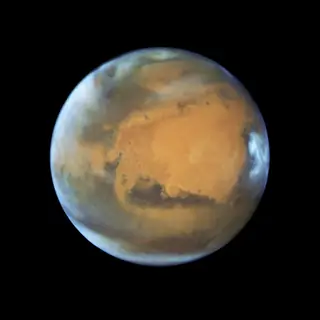 Mars oppositionDates, distances and why some are better.
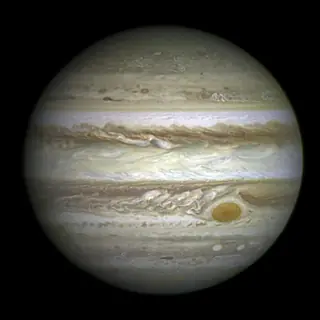 Jupiter oppositionDates and distances.
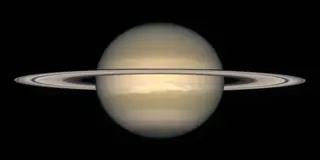 Saturn oppositionDates, distances and ring tilt.
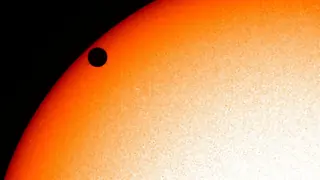 Venus elongationWhen Venus is farthest from the Sun.
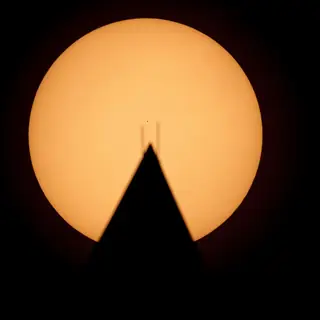 Mercury elongationThe best Mercury evenings and mornings.
Questions people ask
Which planet is next at opposition?
Uranus, on November 25, 2026.
What's a planetary opposition?
When Earth passes between the Sun and an outer planet, so the planet is opposite the Sun in the sky and up all night.
Why does Mars opposition only come every two years?
Mars takes 780 days for Earth to catch up with it, which is about 26 months.
Can you see Uranus and Neptune with the naked eye?
Neptune needs a telescope. Uranus is at the edge of what the eye can see under very dark skies.