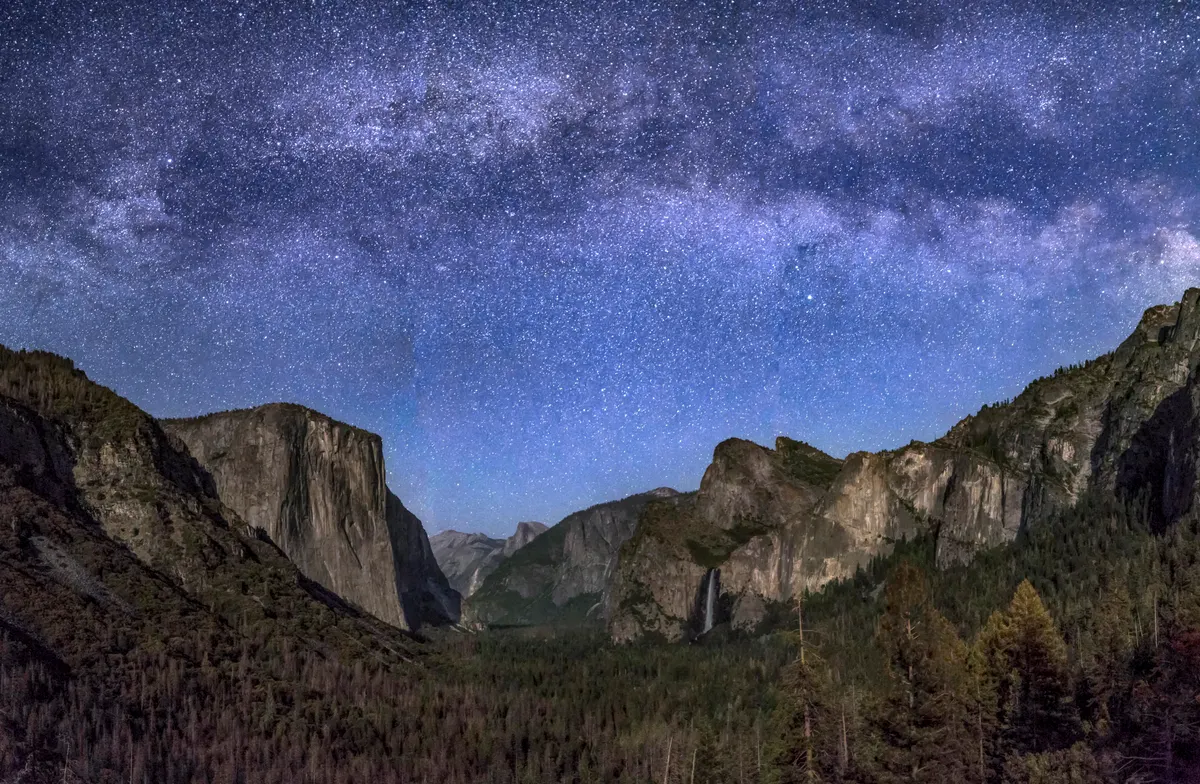
The core clears 10 degrees during full darkness on most nights from February to October. In January, November and December it's out of reach, either too close to the Sun or too low in the dark.
Core score by month
| Month | Core score | Best week | Moon-free core hours a night | Average cloud |
|---|---|---|---|---|
| January | 0 | Core not visible | 0 | 52% |
| February | 4 | February 10 to 16 | 0.4 | 53% |
| March | 19 | March 10 to 16 | 1.6 | 53% |
| April | 34 | April 6 to 12 | 2.6 | 48% |
| May | 56 | May 3 to 9 | 3.6 | 38% |
| June | 80 | June 1 to 7 | 4.9 | 20% |
| July | 82 | July 1 to 7 | 4.6 | 18% |
| August | 62 | August 1 to 7 | 2.9 | 15% |
| September | 27 | September 21 to 27 | 1.3 | 18% |
| October | 7 | October 1 to 7 | 0.4 | 28% |
| November | 0 | Core not visible | 0 | 41% |
| December | 0 | Core not visible | 0 | 54% |
Times are for the best seven nights in each month. Moon-free means the moon is below the horizon. The core counts as visible above 10 degrees in full darkness, when the Sun is more than 18 degrees below the horizon.
The best nights in 2027
- June: June 3 is the best night. The core is above 10 degrees and the moon is down from 10:48 pm to 3:38 am, with the moon 0% lit that night.
- July: July 1 is the best night. The core is above 10 degrees and the moon is down from 10:28 pm to 3:08 am, with the moon 5% lit that night.
- August: August 1 is the best night. The core is above 10 degrees and the moon is down from 9:58 pm to 1:08 am, with the moon 0% lit that night.
Clock times are Pacific time with daylight saving applied. The best nights fall around the new moon, so the dates shift by about 11 days each year.
About Yosemite National Park
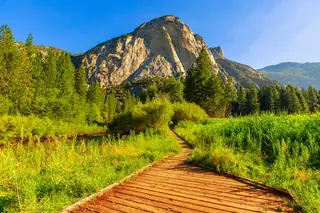
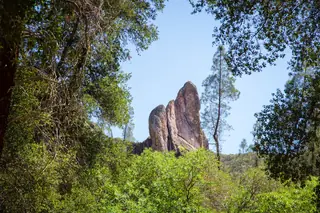
Yosemite is a high-country park in California's Sierra Nevada with tall granite walls, waterfalls, and groves of giant sequoias. El Capitan rises about 3,000 feet from the valley floor, and Half Dome has become a symbol of the park. Spring is the time for waterfalls, and fall is quiet.
Abraham Lincoln signed the Yosemite Grant in 1864, protecting the valley in the first act of its kind. John Muir pushed for a larger protected area, and it became a national park in 1890. The Ahwahneechee people lived in the valley long before.
Yosemite National Park is a national park in California. The National Park Service places its center at 37.85 degrees north and 119.56 degrees west, and the sky calculations on this page use that point. Visitor information, fees and alerts are on the park's own page. National Park Service (opens in a new tab).
How Yosemite National Park compares
Its best monthly core score of 82 ranks 3 of 54 national park units that can see the core. The highest is Lassen Volcanic National Park at 86, and the lowest is Voyageurs National Park at 13. Cloud at Yosemite National Park runs from 15% in August to 54% in December.
The score ranks months and parks. It isn't a forecast for any night, and it leaves out local weather, smoke and light from nearby towns. How the core score works.
How dark is the sky?
The Park Service models how much artificial light brightens the sky across the lower 48. At the point used for Yosemite National Park, it puts the added glow at about 17% of the natural brightness of a moonless sky (a ratio of 0.17). That makes it 19th darkest of the 47 parks it covers. Lower is darker. This is a model, not a reading taken at the park, and it describes one point, so the edges of a large park can differ.
Questions people ask
When is the best time to see the Milky Way at Yosemite National Park?
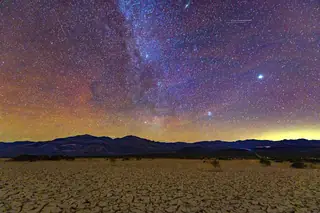
June, July and August are the best months. The best week of 2027 is July 1 to 7.
Can you see the Milky Way at Yosemite National Park all year?
The core clears 10 degrees during full darkness on most nights from February to October. In January, November and December it's out of reach, either too close to the Sun or too low in the dark.
How dark is the sky at Yosemite National Park?
The Park Service models how much artificial light brightens the sky across the lower 48. At the point used for Yosemite National Park, it puts the added glow at about 17% of the natural brightness of a moonless sky (a ratio of 0.17). That makes it 19th darkest of the 47 parks it covers. Lower is darker. This is a model, not a reading taken at the park, and it describes one point, so the edges of a large park can differ.
Does the moon matter at Yosemite National Park?
Yes. A bright moon hides the Milky Way. The best night in July is July 1, when the moon is 5% lit and the core is above 10 degrees from 10:28 pm to 3:08 am.
Roads, seasons and the best pull-offs
Yosemite's sky is as much about road timing as it is about the Moon. The Park Service names the places: in the valley, El Capitan Meadow, Cook's Meadow, Swinging Bridge and Tunnel View; above the valley, Glacier Point Overlook and Washburn Point; along the Tioga Road, Tenaya Lake and Olmsted Point; and in Wawona, Wawona Meadow. It warns that in the valley, car lights and campfire haze can spoil the view.
The high spots depend on the snow. The Glacier Point road is open from about late May to November, and the Tioga Road from about late May or June to November. The Park Service says the core of the Milky Way is easily visible on moonless nights from July through October, and that several thousand stars show when the Moon isn't overhead.
Ranger and partner programs
Summer night sky programs run through the Park Service, the Yosemite Conservancy and Yosemite Hospitality, and some require a reservation. The schedule is in the park calendar and the Yosemite Guide. If you're also headed to the big trees, Sequoia and Kings Canyon is another Sierra Nevada park, and our meteor shower guide shows which nights add shooting stars to the view.
How it fits our numbers
In our 2027 numbers, Yosemite peaks in July with a core score of 82 out of 100. The best week is July 1 to 7, with about 4.6 moon-free hours a night and average cloud near 18 percent. That sits inside the Park Service's July to October window, though the Glacier Point and Tioga roads only open in late May or June, so check road status before planning around an early or late date.