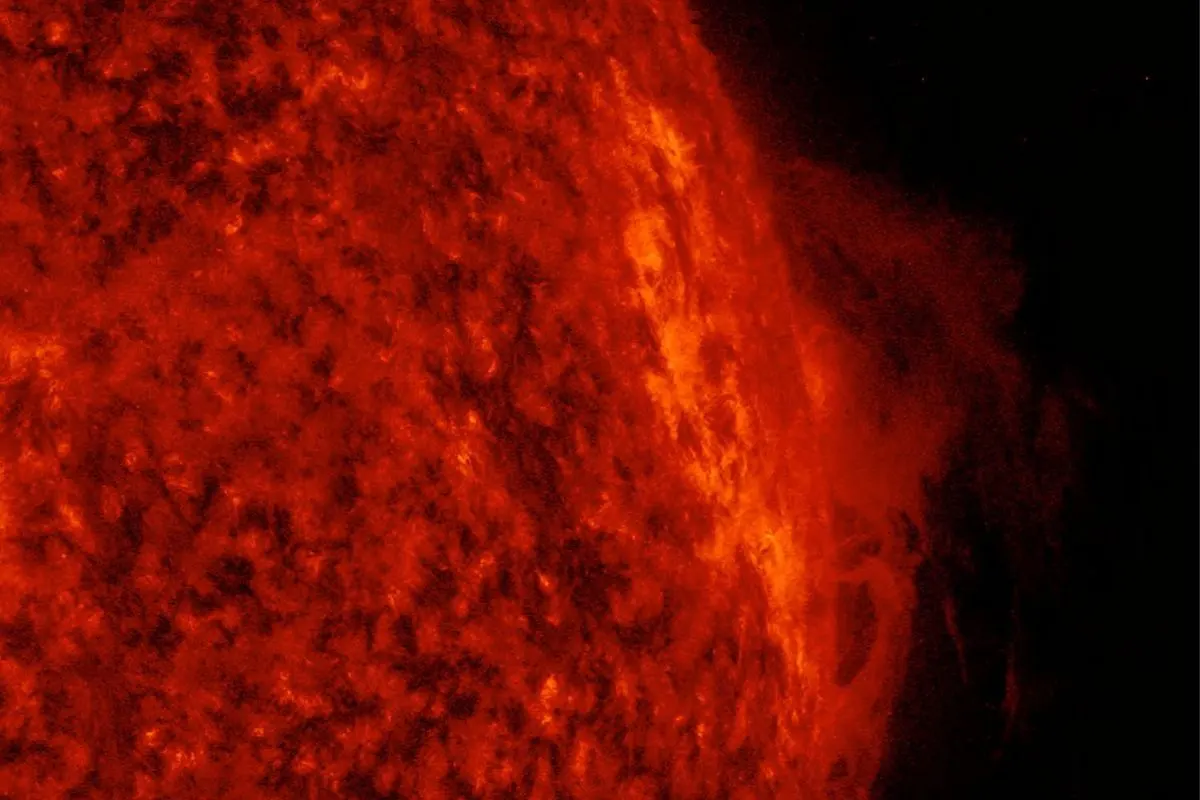
Reaching the Sun is harder than leaving the solar system
It sounds backwards, but it's a matter of motion. Earth is moving at about 67,000 mph, almost entirely sideways relative to the Sun, and a spacecraft launched from Earth inherits that speed. To fall into the Sun it has to lose almost all of it. NASA says Parker Solar Probe only needs to shed 53,000 mph of sideways motion to skim the Sun's atmosphere, and even that's no easy task.
A rocket alone isn't enough. NASA says Parker uses 7 gravity assists at Venus over a 7-year mission, each time dropping some of its sideways speed into Venus's orbital motion. The probe is covered in the Parker Solar Probe page.
The record keeps falling
Parker launched on August 12, 2018. The old record for the closest approach to the Sun was set by Helios 2 in April 1976, at 42.73 million km from the Sun's surface. On December 24, 2024 Parker came within 6.16 million km at 692,000 km/h, the fastest any human-made object has traveled and about 7 times closer than Helios 2. That was 6.4 years after launch.
Travel time by vehicle
| Vehicle | Speed | Closest | Typical | Farthest |
|---|---|---|---|---|
| Walking | 3 mph | 3,476 years | 3,535 years | 3,594 years |
| Bicycle | 12 mph | 869 years | 884 years | 898 years |
| Car on a highway | 65 mph | 160 years | 163 years | 166 years |
| Passenger jet | 570 mph | 18.3 years | 18.6 years | 18.9 years |
| SR-71 Blackbird, its official speed record | 2,193 mph | 4.8 years | 4.8 years | 4.9 years |
| Voyager 1, about 17 km/s | 38,028 mph | 100 days | 102 days | 104 days |
| Parker Solar Probe at closest approach, 692,000 km/h | 429,989 mph | 8 days 21 hours | 9 days | 9 days 4 hours |
| Light | 670,616,629 mph | 8 minutes 11 seconds | 8 minutes 19 seconds | 8 minutes 27 seconds |
How long real spacecraft took
Parker Solar Probe needed 6.4 years. Spacecraft rarely fly straight at a target. They follow curved paths timed to launch windows, so the trip is longer than the distance alone suggests.
| Mission | Launched | Arrived | Trip time | What happened |
|---|---|---|---|---|
| Parker Solar Probe | August 12, 2018 | December 24, 2024 | 6.4 years | Closest approach, 6.1 million km from the Sun's surface at 692,000 km/h |
Why the answer changes
The Sun is 1.0 times farther away at its farthest than at its closest, so every travel time above is 1.0 times longer at the far end. The Earth's orbit is slightly oval, so the distance changes by about 3,106,856 miles over the year. The typical figure is the average.
Try your own speed
Other destinations
 The MoonBy car, 145 days at the closest.
 MarsBy car, 59.5 years at the closest.
 VenusBy car, 41.7 years at the closest.
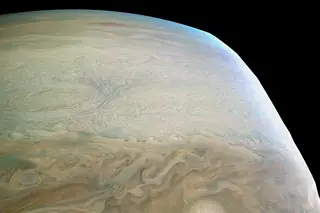 JupiterBy car, 642 years at the closest.
Eight minutes and some seconds
Sunlight takes 8 minutes 19 seconds to reach Earth on average. It takes 8 minutes 11 seconds when Earth is closest and 8 minutes 27 seconds when it is farthest, because Earth's orbit is slightly oval. The sums behind distances in astronomical units are in the distance of each planet from the Sun. You can try other distances in the light travel calculator.
A car, a jet and a spacecraft
At 65 mph a car would need 160 years to reach the Sun, and a passenger jet 18.3 years. Parker's record speed would cover the same distance in 8 days 21 hours. That's far quicker, and still it's the fastest anyone has gone.
Looking without going
Most people see the Sun's edge only during an eclipse. The next total solar eclipses are listed in total solar eclipses. Parker is the closest we have come to touching it.
The Sun in numbers
The fact sheet gives the Sun a surface gravity of 274 meters per second squared, 28 times Earth's. A 70 kg person would read about 1,960 kg on a scale there, if the surface could be stood on. Earth's distance from the Sun runs from 147,100,000 km at the closest to 152,100,000 km at the farthest, a change of only about 3.4 percent. Seasons come from tilt, not distance. See planet tilt and seasons.
If Apollo had to hurry
Apollo 11 reached lunar orbit in about 76 hours. To cross the Sun's average distance in that time takes an average of 1,972,748 km/h, which is 1,225,809 mph. Parker's record, 692,000 km/h, would cover the same distance in 9 days if it could fly straight there at that speed, which it can't.
Light from the Sun
Because the Earth-Sun distance varies, so does the delay: 8 minutes 11 seconds at the closest and 8 minutes 27 seconds at the farthest. The gap between the two is 17 seconds. Light is the only messenger that crosses the whole distance in minutes.
Closer than Mercury will ever be
Mercury is the closest planet to the Sun, and its closest approach in the fact sheet is 46,000,000 km from the Sun's center. Parker's closest pass, 6.16 million km from the surface, is more than seven times nearer than that. Light from the Sun needs only 21 seconds to reach that point, against 8 minutes 19 seconds to reach Earth.
How fast is the record, really?
Parker's 692,000 km/h works out to about 192 km/s. Light moves 1,560 times faster. That makes the record impressive on human terms and modest next to the cosmic speed limit. A spacecraft at that speed would cross the distance from Earth to the Moon, at its average distance, in about 33 minutes, and the distance from Earth to Mars at its closest in about 3.3 days. Neither trip is possible in practice, because the speed was reached only by falling toward the Sun.