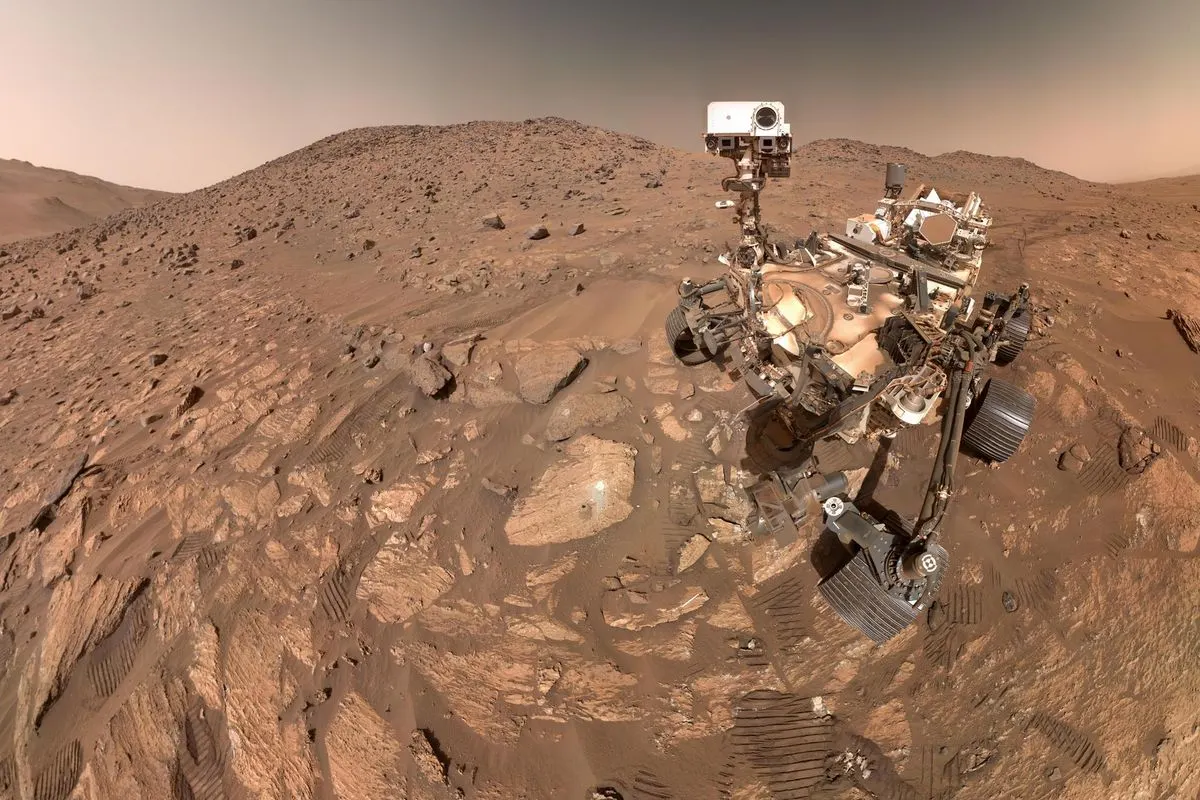
You can only leave when the planets line up
Mars missions leave in bunches. Earth takes 365.2 days to orbit the Sun and Mars takes 687, so Earth overtakes Mars about once every 780 days, roughly 25.6 months, and that's when the two planets are placed for a cheap trip. The figure is calculated here from the orbital periods in the NASA planetary fact sheet. Miss the window and the next one is more than two years away.
The most recent crowded window was the summer of 2020. The UAE's Hope orbiter launched on July 19 (Universal Time), China's Tianwen-1 on July 23 and NASA's Perseverance on July 30, three launches within 11 days. Mars has a long record of missions that left on time and didn't arrive, which is the subject of the Mars missions that failed.
Seven months, give or take
Perseverance took 203 days to reach Mars. It launched on July 30, 2020 and landed in Jezero Crater on February 18, 2021. Curiosity took 254 days. Both flew a curved path that left Earth's orbit and met Mars on the far side of its own arc, so the distance they flew was longer than the gap between the planets at launch.
The fastest trips tend to be the ones that don't stop. Mariner 7 launched on March 27, 1969 and flew past Mars 130 days later at a range of about 3,430 km. A flyby doesn't have to slow down. A lander or orbiter does, and braking is where much of the fuel goes. The full list of arrivals is in every Mars mission.
Travel time by vehicle
| Vehicle | Speed | Closest | Typical | Farthest |
|---|---|---|---|---|
| Walking | 3 mph | 1,290 years | 5,387 years | 9,484 years |
| Bicycle | 12 mph | 323 years | 1,347 years | 2,371 years |
| Car on a highway | 65 mph | 59.5 years | 249 years | 438 years |
| Passenger jet | 570 mph | 6.8 years | 28.4 years | 49.9 years |
| SR-71 Blackbird, its official speed record | 2,193 mph | 645 days | 7.4 years | 13.0 years |
| Voyager 1, about 17 km/s | 38,028 mph | 37 days | 155 days | 273 days |
| Parker Solar Probe at closest approach, 692,000 km/h | 429,989 mph | 3 days 7 hours | 14 days | 24 days |
| Light | 670,616,629 mph | 3 minutes 2 seconds | 12 minutes 41 seconds | 22 minutes 19 seconds |
How long real spacecraft took
Perseverance needed 203 days and Curiosity 254 days. Spacecraft rarely fly straight at a target. They follow curved paths timed to launch windows, so the trip is longer than the distance alone suggests.
| Mission | Launched | Arrived | Trip time | What happened |
|---|---|---|---|---|
| Perseverance | July 30, 2020 | February 18, 2021 | 203 days | Landed in Jezero Crater |
| Curiosity | November 26, 2011 | August 6, 2012 | 254 days | Landed in Gale Crater |
Why the answer changes
Mars is 7.4 times farther away at its farthest than at its closest, so every travel time above is 7.4 times longer at the far end. The distance depends on where both planets are in their orbits. The closest figure is the smallest possible gap, and the typical figure is the midpoint between the closest and the farthest.
Try your own speed
Other destinations
 The MoonBy car, 145 days at the closest.
 The SunBy car, 160 years at the closest.
 VenusBy car, 41.7 years at the closest.
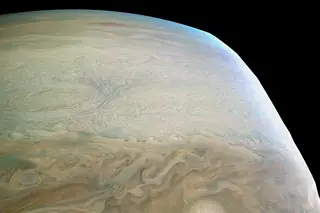 JupiterBy car, 642 years at the closest.
The radio delay is the real distance
Light takes 3.0 minutes to cross the shortest gap to Mars and 22.3 minutes to cross the longest, using the fact sheet distances. Sunlight takes 13 minutes on average to reach Mars, NASA says. A reply to a command can take up to about 45 minutes, so rovers like Perseverance have to make many of their own decisions. Every Mars rover shows how each one handled it.
When the Sun gets in the way
About every two years Mars passes behind the Sun as seen from Earth, and radio signals have to pass close to it. The Sun's hot gas can garble them. In October 2021 NASA's Mars missions went quiet for about two weeks, Space.com reported. Engineers send no commands during these gaps, and rovers don't drive or move their arms. The spacecraft keep observing and send the results home afterward.
Why the closest distance is never the plan
The table uses 54,600,000 km as the closest Mars can be to Earth, the smallest gap in the fact sheet. Missions are timed for energy, not for the nearest moment. That's why the real trips above took months, while a car at 65 mph would need 59.5 years.
For the planet itself, see Mars. For when it is brightest in the night sky, which follows a different calendar from the launch windows, see Mars at opposition.
The speed Mars would demand
Suppose you wanted to reach Mars in the 76 hours Apollo 11 needed to enter lunar orbit. At the closest distance in the fact sheet, 54,600,000 km, that means averaging 720,000 km/h, or 447,387 mph, for the whole trip. That's far faster than any crewed vehicle has gone. Stretch the same trip to one year and the average falls to 6,229 km/h (3,870 mph), a figure a spacecraft can reach, which is why real missions take months or years.
Sunlight at Mars
Sunlight gets weaker with the square of the distance. With Mars at 1.52 times Earth's distance from the Sun on average, it receives about 0.431 times as much sunlight as Earth does. Light from the Sun takes 12.7 minutes to get there, against 8.3 minutes to reach Earth. The distances come from the NASA fact sheet and the sums are done here.
A year, a pull and the moons
Mars takes 687 days to go round the Sun, which is 1.88 Earth years. Surface gravity is 0.38 times Earth's, so a 70 kg person would read about 26 kg on a scale there. The fact sheet lists 2 known moons. Try your own numbers in the weight calculator or the age calculator.