A trip no spacecraft is making
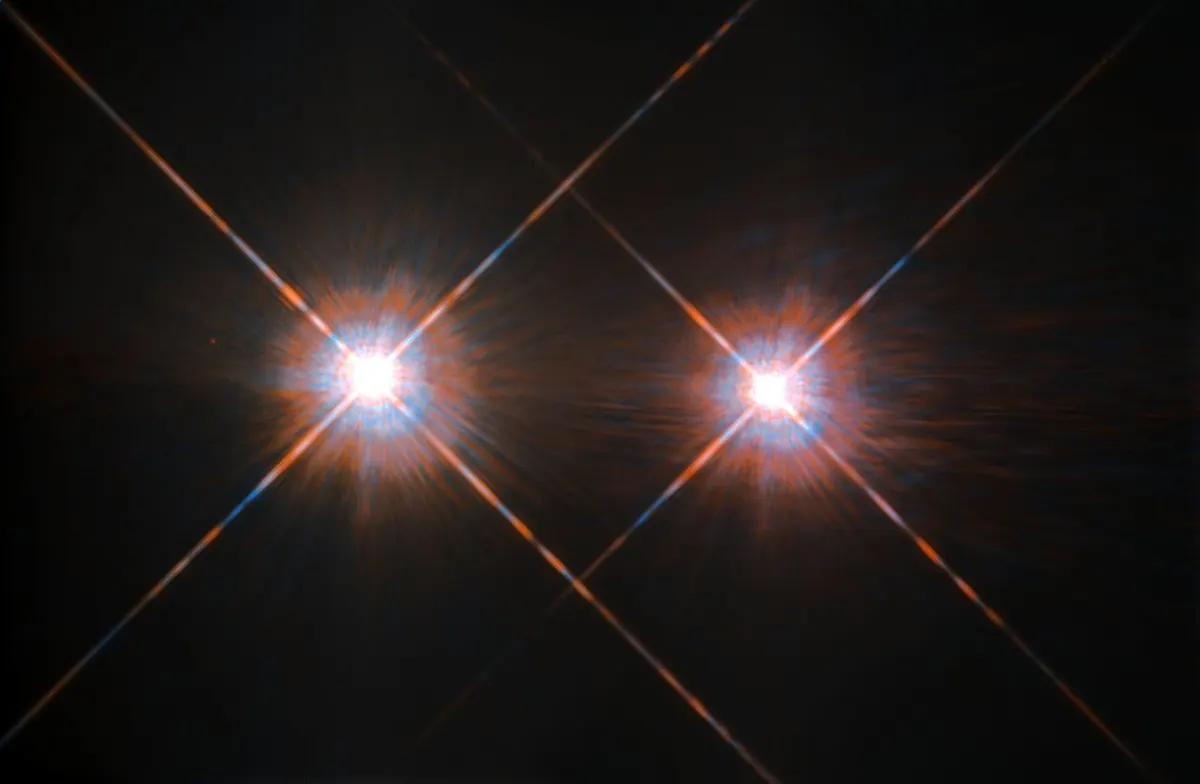
The nearest star to the Sun, Proxima Centauri, is 4.2465 light years away. Robert Innes found it in 1915, and it's a small, dim red star that can't be seen without a telescope. At Voyager 1's speed of about 17 km/s a spacecraft would need about 74,886 years to get there. At Parker Solar Probe's record speed, the fastest ever reached, it would still need about 6,623 years.
Neither spacecraft is heading there. Voyager 1 is leaving the solar system, and its story is told in the Voyager 1 page.
A planet worth the trip
In August 2016 a team led by Guillem Anglada-Escude reported a planet orbiting Proxima Centauri every 11.18 days, with a minimum mass of about 1.055 Earths. It's called Proxima Centauri b. It orbits close to its star, within the zone where liquid water could exist on a surface, which makes it the most tempting target. Nobody knows whether anything is there. See the nearest exoplanets for what else is known nearby.
Travel time by vehicle
| Vehicle | Speed | Time to Proxima Centauri |
|---|---|---|
| Walking | 3 mph | 949,257,839 years |
| Bicycle | 12 mph | 237,314,460 years |
| Car on a highway | 65 mph | 43,811,900 years |
| Passenger jet | 570 mph | 4,996,094 years |
| SR-71 Blackbird, its official speed record | 2,193 mph | 1,298,574 years |
| Voyager 1, about 17 km/s | 38,028 mph | 74,886 years |
| Parker Solar Probe at closest approach, 692,000 km/h | 429,989 mph | 6,623 years |
| Light | 670,616,629 mph | 4.2 years |
At the speed of real spacecraft
No spacecraft is heading for Proxima Centauri. Voyager 1 is leaving the solar system at about 17 km/s and would take 74,886 years to cover the distance. Parker Solar Probe reaches 692,000 km/h (about 192 km/s) at its closest approach to the Sun, the fastest any spacecraft has gone. Holding that speed all the way would still take 6,623 years. Light needs 4.2 years.
Try your own speed
Other destinations
 The MoonBy car, 145 days at the closest.
 MarsBy car, 59.5 years at the closest.
 The SunBy car, 160 years at the closest.
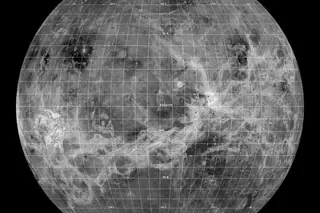 VenusBy car, 41.7 years at the closest.
The proposal to go anyway
In April 2016 the Breakthrough Initiatives announced Starshot, a plan to push tiny light-sail probes with a powerful beam of light. The project says such a system could reach up to 100 million miles an hour, so that a flyby mission could reach Alpha Centauri in just over two decades from launch. It's a research program, not a mission with a launch date. Even at one percent of the speed of light, which is far faster than any spacecraft has flown, the trip would take 425 years.
The distance in plain terms
A light year is 9,460,730,472,581 km, and 4.2465 of them is 40,174,991,951,814 km. Light takes 4.2465 years to cover it, so a radio message sent today would arrive about four and a quarter years later. A car at 65 mph would need 43,811,900 years, and a jet 4,996,094 years.
Putting it in scale
The distance is so large that the usual comparisons stop working. On the street-sized model in the scale page, where one astronomical unit is a meter, Proxima Centauri is about 268,549 meters away. You can enter your own speed above and see how many years it takes.
Speed against distance
Distances to stars are so large that the usual rules of thumb break. At 4.2465 light years, Proxima Centauri is about 268,549 times farther than the Sun is from Earth, and 6,802 times farther than Pluto is at its average distance. A spacecraft that could reach Pluto in a decade would still need many thousands of years to reach Proxima.
Light is the only fast option
Radio waves from a probe at Proxima Centauri would reach us 4.2465 years after they left. A question and an answer would take twice that, about 8.5 years. Any probe sent there would have to work alone, and the news of its arrival would come four and a quarter years after the event.
What it means for the calculators
You can try the distance in the light travel calculator or use the speed box above to see how long any speed would take. Enter a few tens of thousands of miles an hour and the answer is tens of thousands of years.
Light-days to light-years
NASA says Voyager 1, the most distant spacecraft, is on the brink of being one light-day from Earth. A light year is 365.25 light-days, so Proxima Centauri is 1,551 light-days away. Voyager 1 would need to travel about 1,551 times as far as it has gone in nearly half a century to get there.
A short year at Proxima b
Proxima Centauri b circles its star every 11.18 days, so its year is 7.9 times shorter than Mercury's. It sits that close because the star is small and dim. A calendar like ours would hold 33 of its years in one Earth year.
One light year at record speed
Even at Parker Solar Probe's record speed, one light year takes about 1,560 years to cross. The nearest star is 4.2465 of them. That's why the plans for interstellar probes involve very small spacecraft and very large lasers, not larger rockets.