Your weight
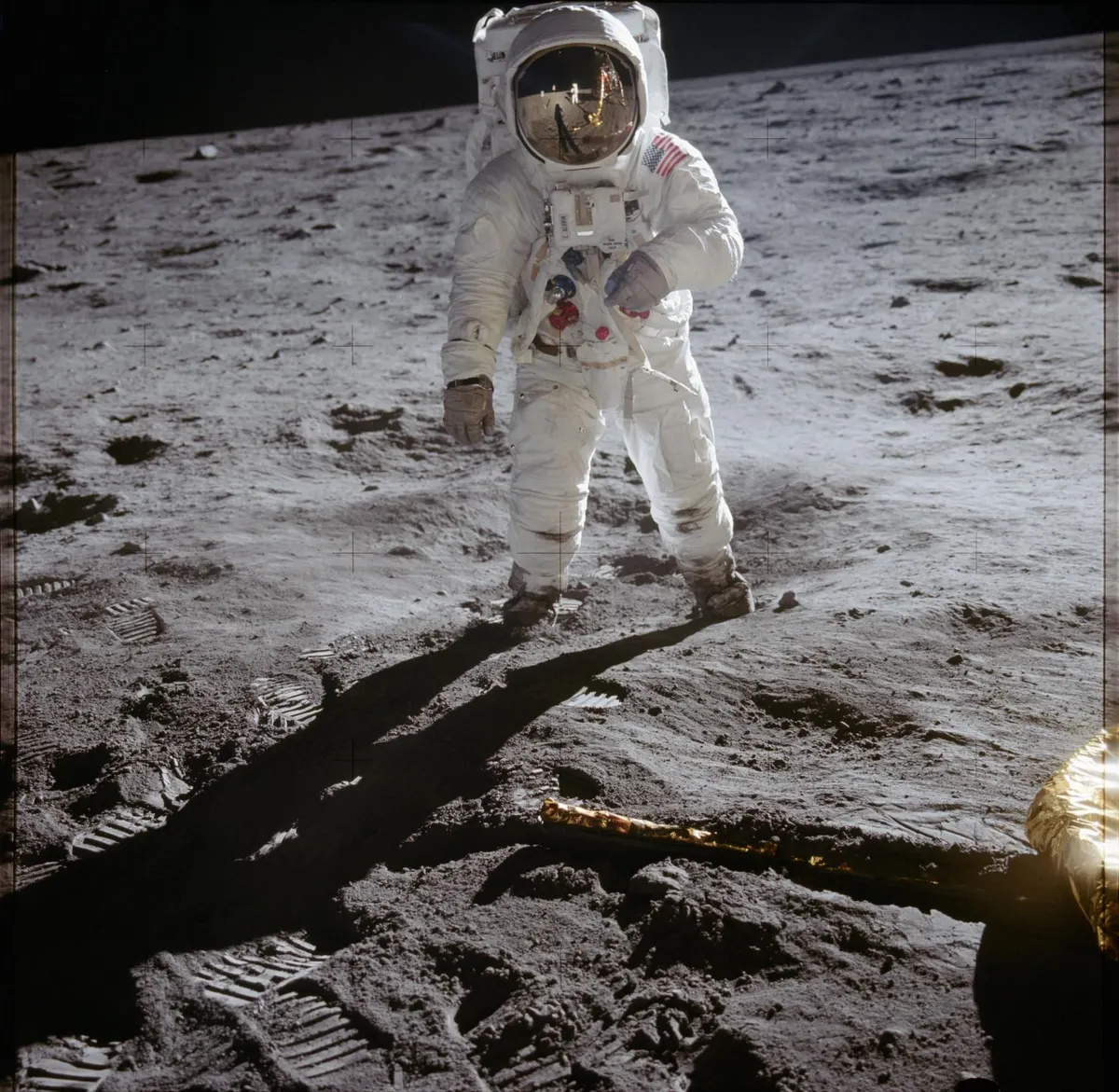
At 150 lb on Earth you would weigh 354 lb on Jupiter and 25 lb on the Moon.
| World | Your weight | Compared with Earth |
|---|---|---|
| Moon | 25 lb | 17% |
| Mercury | 57 lb | 38% |
| Venus | 136 lb | 91% |
| Mars | 57 lb | 38% |
| Jupiter | 354 lb | 236% |
| Saturn | 137 lb | 92% |
| Uranus | 133 lb | 89% |
| Neptune | 168 lb | 112% |
| Pluto | 11 lb | 7% |
| Sun | 4,200 lb | 2800% |
Your mass, the amount of matter in your body, stays the same everywhere. Your weight is the pull of gravity on that mass, so it changes with the size and density of the world you stand on. Jupiter's gravity is 2.36 times Earth's. Pluto's is 0.071 times, so a 150 lb person would weigh 11 lb there.
Jupiter, Saturn, Uranus and Neptune have no solid surface, so their figures are the gravity at the level where the air pressure equals Earth's at sea level. Saturn's gravity is 0.92 times Earth's, a little less than Earth's own, even though Saturn is far larger, because it's so much less dense. The Sun's figure is gravity at its visible surface.
Mass stays, weight changes
Mass is how much matter you're made of, and it's the same on every world. Weight is the pull of a world's gravity on that mass. A world's surface gravity depends on how much matter it holds and how far the surface is from its center, so a small light world pulls gently and a large dense one pulls hard. The ratios in the table above come from the NASA planetary fact sheet and are relative to Earth, so Earth is 1.0.
A bathroom scale doesn't measure mass directly. It measures how hard you press down on it. Take the same scale to the Moon and it would read about 17 percent of what it reads at home.
A worked example
Take someone with a mass of 70 kg. On Earth the scale reads 70 kg. On Mars, where gravity is 0.38 times Earth's, the same scale would read about 26 kg. On the Moon it would read about 12 kg and on Pluto about 5 kg. On Jupiter, where gravity is 2.36 times Earth's, it would read about 165 kg, and on the Sun it would read about 1,960 kg, if anyone could stand there.
A ratio of 0.38 means you press down with 38 percent of your usual force, which feels like losing about 62 percent of your weight.
Where the table isn't what it seems
Jupiter, Saturn, Uranus and Neptune have no solid surface, so their figures are for the level where the air pressure equals one bar, close to what you feel at sea level on Earth. Saturn is far larger than Earth but its gravity ratio is only 0.92, because it's so much less dense. You can see the same effect in gravity on each planet and the density of each planet.
Weightless isn't the same as no gravity
Astronauts in orbit seem to float, but gravity hasn't gone away. They float because they and their spacecraft are falling around the Earth together, so nothing presses them against the floor. The Apollo astronauts on the Moon felt its gravity directly, about 17 percent of Earth's, and their missions are covered in Apollo by the numbers. For how long the trip takes, see the Moon travel page.
The rest of the planets
For the same 70 kg person the scale would read: Mercury 26 kg, Venus 63 kg, Mars 26 kg, Saturn 64 kg, Uranus 62 kg, Neptune 78 kg. Venus, Saturn and Uranus come out a little lighter than Earth, and Neptune a little heavier. Only Jupiter pulls much harder, and the small worlds pull much less.