Two hundred and counting
223 launches made 2023 the third record year in a row, 37 more than 2022. The United States flew 109 of them and China 67. SpaceX alone flew 98: 91 Falcon 9s, 5 Falcon Heavies and 2 Starship flights, which is 44% of the world total. Twelve launches failed, and two of them were the first two Starship flights, which GCAT counts as launch attempts. The year also brought the first methane-fuelled rocket to reach orbit, Japan's new H3 failing on its first flight, and India's first lunar landing.
2,952 payloads were carried into orbit. 12 launches failed. 2 Starship test flights are included in the total.
Launches by month
By country
The biggest change from 2022 was the United States, up 31 to 109 launches.
By launch site
By rocket
Launches in every year since 1957.
The year before is on the 2022 launch page. The next year is on the 2024 launch page.
The landmark flights
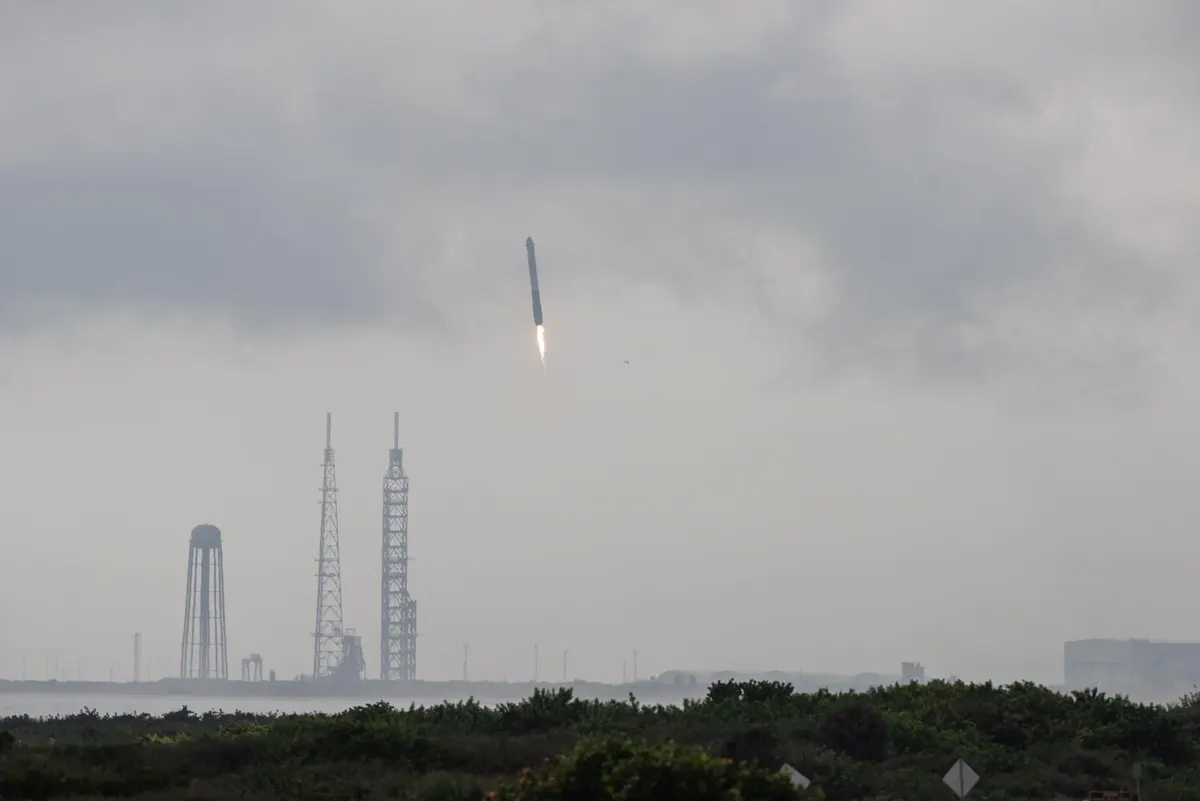
Starship. The first full Starship stack flew on April 20, 2023 and the second on November 18, 2023. GCAT logs both as failures because the vehicle was lost before completing its flight, even though SpaceX treated each as a test. Every Starship flight is on the SpaceX page.
Falcon Heavy five times. Wikipedia describes the Jupiter-3 satellite, launched on July 29, 2023, as the heaviest geostationary satellite launched to that date at more than 9 tonnes. NASA's Psyche asteroid mission flew on October 13, 2023.
India lands, Russia crashes. Our mission ledgers list 3 Moon and Mars missions that launched in 2023: 2 success, 1 failure. India's Chandrayaan-3 launched on July 14, 2023 and landed on August 23, 2023. Russia's Luna 25 launched on August 10, 2023 and crashed on August 19, 2023. Japan's SLIM launched on September 6, 2023 and landed the following January. The list of Moon landings keeps the details.
Methane. China's Zhuque-2 reached orbit on July 12, 2023, which Wikipedia calls the first orbital launch by a methane-fuelled rocket.
Twelve failures
Six of the failures were first flights: RS1, Qaem-100, H3-22S, Terran 1, Starship V1.0 and Cheonlima-1. Japan's H3 failed on March 7, 2023. In the United States, Virgin Orbit's LauncherOne failed on January 9, ABL's RS1 on January 10, Relativity's Terran 1 on March 23 and Firefly's Alpha on December 22. Iran's Qaem-100 failed on March 4. North Korea launched 3 times and lost two of them, on May 30 and August 23. Rocket Lab's Electron failed on September 19 and China's Ceres-1 (GCAT calls it Gushenxing 1) on September 21. The success rate fell to 95% from 96% in 2022, but on 37 more launches.
Rockets and launch sites
Falcon 9 flew 91 of the 223 launches (41%), ahead of Chang Zheng 2D with 12 and Electron with 9. By site, Cape Canaveral had 59, Jiuquan 36, Vandenberg 28 and Xichang 15. Eleven countries launched at least once in all, counting the launching country the way GCAT does. The launches put 2,952 satellites into orbit, an average of 13 per launch. 1,984 of them, 67%, were Starlink satellites. The rest, 968, came from every other operator in the world put together.
New rockets and shifting shares
GCAT logs eight rocket types flying for the first time in 2023: RS1 (January 10), Qaem-100 (March 4), H3-22S (March 7), Terran 1 (March 23), Tianlong-2 (April 2), Starship V1.0 (April 20), Cheonlima-1 (May 30), ADD TV2 (December 4). Six of them failed on that first flight. Some are new versions of a rocket that already existed, which GCAT lists under a new name. Against 2022, the biggest gain was the United States, up 31 to 109, and the biggest fall was France, down 2 to 3.
The shape of the year
February was the quietest full month with 12 launches and December the busiest with 29. By quarter the counts run 53, 45, 63 and 62, so 28% of the year's launches came in the final three months.
Where the year ranks
Among the 70 years in the log, 2023 ranks 4th for the number of launches. No earlier year in the log had as many. The log holds 7,433 launches in all, an average of 106 a year, so 2023 was at 2.1 times the long-run average.
Electron and the country count
Rocket Lab flew 9 Electrons in 2023: 7 from New Zealand and 2 from the United States, which is why the American total of 109 and the New Zealand total of 7 differ from lists that credit the company. See the Rocket Lab page. The busiest month was December with 29 launches. Next: 2024.