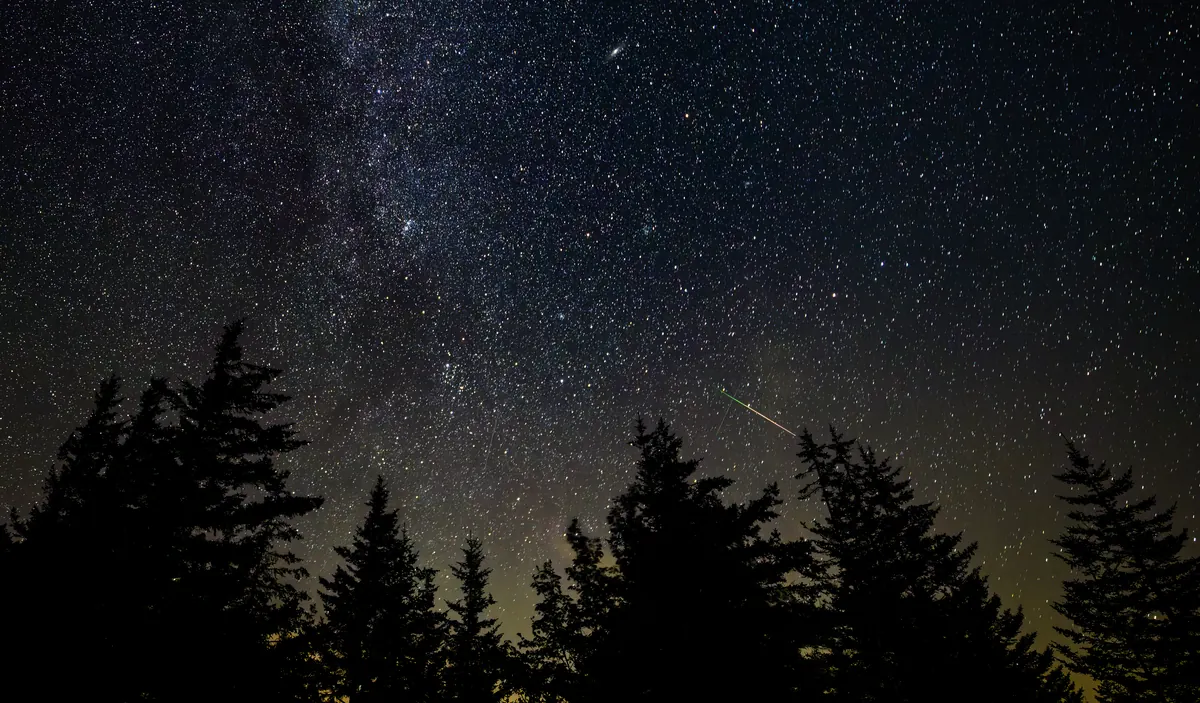
How a meteor shower works
A meteoroid is a rock still in space, from a dust grain to a small asteroid. When it hits the atmosphere at high speed it burns up as a meteor, the streak many people call a shooting star. If any of it survives to the ground it's a meteorite. NASA's All Sky Fireball Network uses the word fireball for meteors brighter than Venus.
Showers happen when Earth passes through the dusty trail a comet leaves along its orbit. Because the trail stays in place, the shower returns on almost the same date each year. NASA estimates that about 48.5 tons (44 tonnes) of meteoritic material hits Earth every day, and nearly all of it vaporizes.
How to read the numbers
The International Meteor Organization's ZHR, the zenithal hourly rate, is an ideal count: what one observer would see under a perfect sky with the radiant straight overhead. It's the standard way to compare showers, and it's a ceiling, not a forecast.
NASA publishes a lower figure for each shower under dark skies, and the two differ by a factor of several for most of them. This site shows both where they exist. For a quick plan, treat the NASA dark sky figure as what to expect from a good site, and the ZHR as the best case.
The year in order
From October 19, 2026, the next peaks fall in this order: Quadrantids on January 4, 2027; Lyrids on April 23, 2027; Eta Aquariids on May 6, 2027; Southern Delta Aquariids on July 31, 2027; Perseids on August 13, 2027; Draconids on October 9, 2027; Orionids on October 22, 2027; Taurids on November 6, 2027; Leonids on November 18, 2027; Geminids on December 14, 2027; Ursids on December 23, 2027. Each date is calculated from the position of the Sun and the published solar longitude of each shower, not copied from a calendar, and the Moon at each peak comes from the same sky engine.
Showers can be grouped by where they are best seen. The Eta Aquariids and the Southern Delta Aquariids favor the south, the Ursids and the Quadrantids favor the north, and the Leonids, Orionids and Taurids work from both.
Strong, weak and strange
By ZHR the strongest on the calendar is the Geminids, at 150, and the weakest is the Draconids, at 5. The weak ones aren't worthless. The Draconids have produced storms, and the Taurids produce fireballs.
The sources that sit behind each page are listed at its foot. Peak solar longitudes, radiants, speeds and ZHR are from the International Meteor Organization list as tabulated by Wikipedia, and history and rates are from NASA Science pages where they exist.
The next peak of every shower
| Shower | Next peak | ZHR | Speed | Moon lit | Night rating, 40 N | Parent |
|---|---|---|---|---|---|---|
| Quadrantids | January 4, 2027 | 80 | 41 km/s | 12% | Excellent | asteroid 2003 EH1 |
| Lyrids | April 23, 2027 | 18 | 49 km/s | 95% | Poor | comet C/1861 G1 Thatcher |
| Eta Aquariids | May 6, 2027 | 50 | 66 km/s | 0% | No dark window | comet 1P/Halley |
| Southern Delta Aquariids | July 31, 2027 | 25 | 41 km/s | 4% | Excellent | suspected comet 96P/Machholz |
| Perseids | August 13, 2027 | 100 | 59 km/s | 86% | Good | comet 109P/Swift-Tuttle |
| Draconids | October 9, 2027 | 5 | 20 km/s | 67% | Poor | comet 21P/Giacobini-Zinner |
| Orionids | October 22, 2027 | 20 | 66 km/s | 58% | No dark window | comet 1P/Halley |
| Taurids | November 6, 2027 | 5 | 27 km/s | 47% | Excellent | comet 2P/Encke |
| Leonids | November 18, 2027 | 15 | 71 km/s | 80% | No dark window | comet 55P/Tempel-Tuttle |
| Geminids | December 14, 2027 | 150 | 35 km/s | 98% | No dark window | asteroid 3200 Phaethon |
| Ursids | December 23, 2027 | 10 | 33 km/s | 21% | Excellent | comet 8P/Tuttle |
ZHR is the zenithal hourly rate, what an ideal observer under perfect skies with the radiant overhead would see. Real rates are usually well below that. The night rating counts dark, moon-free hours with the radiant above 20 degrees at 40 degrees north.
Which showers have a dark sky each year
| Year | Showers with at least four dark, moon-free hours with the radiant up (40 N or 30 S) |
|---|---|
| 2027 | Quadrantids, Southern Delta Aquariids, Taurids, Ursids |
| 2028 | Quadrantids, Lyrids, Orionids, Leonids, Geminids, Ursids |
| 2029 | Perseids, Draconids, Taurids, Geminids |
| 2030 | Quadrantids, Southern Delta Aquariids, Ursids |
| 2031 | Lyrids, Perseids, Draconids, Orionids, Leonids, Geminids |
| 2032 | Southern Delta Aquariids, Perseids, Draconids, Taurids, Ursids |
| 2033 | Quadrantids, Southern Delta Aquariids, Orionids, Geminids, Ursids |
| 2034 | Lyrids, Perseids, Draconids, Orionids, Taurids, Leonids, Geminids |
How the Moon changes things
Showers peak at the same point in Earth's orbit, so the peak falls on almost the same date every year. The Moon's phase moves about 11 days earlier each year against the calendar, so a shower that's washed out by a full Moon one year can be perfectly dark two or three years later. Each shower page lists the next 8 years.
 QuadrantidsNext peak January 4, 2027.
 LyridsNext peak April 23, 2027.
 Eta AquariidsNext peak May 6, 2027.
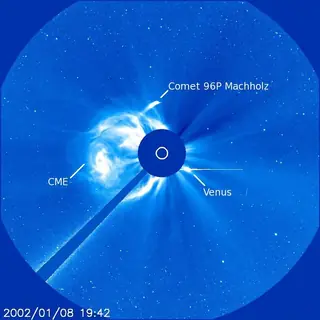 Southern Delta AquariidsNext peak July 31, 2027.
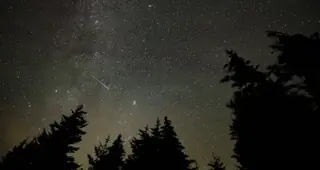 PerseidsNext peak August 13, 2027.
 DraconidsNext peak October 9, 2027.
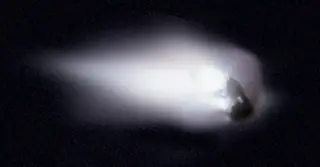 OrionidsNext peak October 22, 2027.
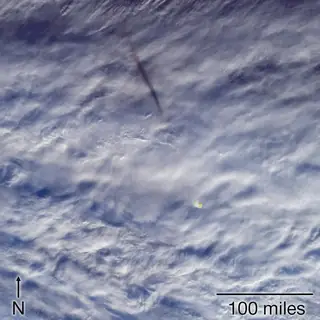 TauridsNext peak November 6, 2027.
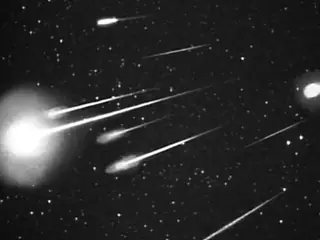 LeonidsNext peak November 18, 2027.
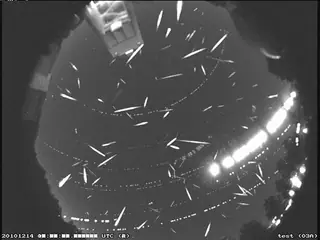 GeminidsNext peak December 14, 2027.
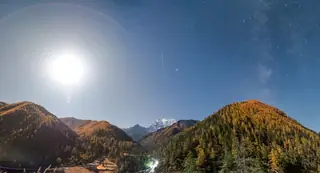 UrsidsNext peak December 23, 2027.
Questions people ask
Which meteor shower is next?
The Quadrantids, which peaks on January 4, 2027.
What's the best meteor shower of the year?
By the IMO's ideal rate, the Geminids, with a ZHR of 150.
What does ZHR mean?
The zenithal hourly rate is what a perfect observer would see under ideal skies with the radiant overhead. Real rates are lower.
Why does the Moon matter for meteor showers?
Moonlight washes out the faint meteors, so a shower with a bright Moon at its peak shows far fewer.
Which shower, and when
Sorted by the next peak after October 19, 2026, the calendar starts with the Quadrantids on January 4, 2027, with the Moon 12% lit. Of the 11 showers listed, 4 have a Moon under a quarter lit at their next peak: Quadrantids, Eta Aquariids, Southern Delta Aquariids and Ursids.
The stand-outs by ZHR are the Geminids, the Perseids and the Quadrantids. The Geminids are the most reliable, the Perseids the easiest in warm weather, and the Quadrantids the shortest, with a peak that lasts hours.
Where the Moon fits in
The Moon is the one factor you can read from the calendar. A bright Moon hides the faint meteors, which are most of them. The tables on each shower page give the Moon at every peak for 8 years and the dark, moon-free hours at two latitudes.
For another way the Moon shapes the sky, see the next lunar eclipse. For dark places to watch from, the Milky Way season guide ranks national parks by sky quality. The sky calendar has the rest of the year.