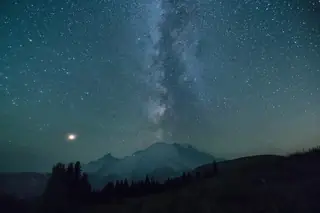
The core clears 10 degrees during full darkness on most nights from April to August. In January, February, March, September, October, November and December it's out of reach, either too close to the Sun or too low in the dark.
Core score by month
| Month | Core score | Best week | Moon-free core hours a night | Average cloud |
|---|---|---|---|---|
| January | 0 | Core not visible | 0 | 80% |
| February | 0 | Core not visible | 0 | 74% |
| March | 0 | March 25 to 31 | 0.1 | 79% |
| April | 4 | April 7 to 13 | 0.6 | 75% |
| May | 9 | May 3 to 9 | 1.2 | 70% |
| June | 15 | June 1 to 7 | 1.9 | 68% |
| July | 21 | July 1 to 7 | 1.6 | 46% |
| August | 10 | August 1 to 7 | 0.8 | 48% |
| September | 1 | September 1 to 7 | 0.1 | 54% |
| October | 0 | Core not visible | 0 | 68% |
| November | 0 | Core not visible | 0 | 77% |
| December | 0 | Core not visible | 0 | 79% |
Times are for the best seven nights in each month. Moon-free means the moon is below the horizon. The core counts as visible above 10 degrees in full darkness, when the Sun is more than 18 degrees below the horizon.
The best nights in 2027
- June: June 5 is the best night. The core is above 10 degrees and the moon is down from 12:24 am to 2:14 am, with the moon 3% lit that night.
- July: July 1 is the best night. The core is above 10 degrees and the moon is down from 12:24 am to 1:54 am, with the moon 5% lit that night.
- August: August 1 is the best night. The core is above 10 degrees and the moon is down from 11:14 pm to 11:54 pm, with the moon 0% lit that night.
Clock times are Pacific time with daylight saving applied. The best nights fall around the new moon, so the dates shift by about 11 days each year.
About Olympic National Park
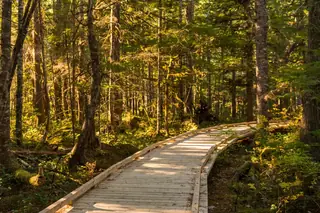
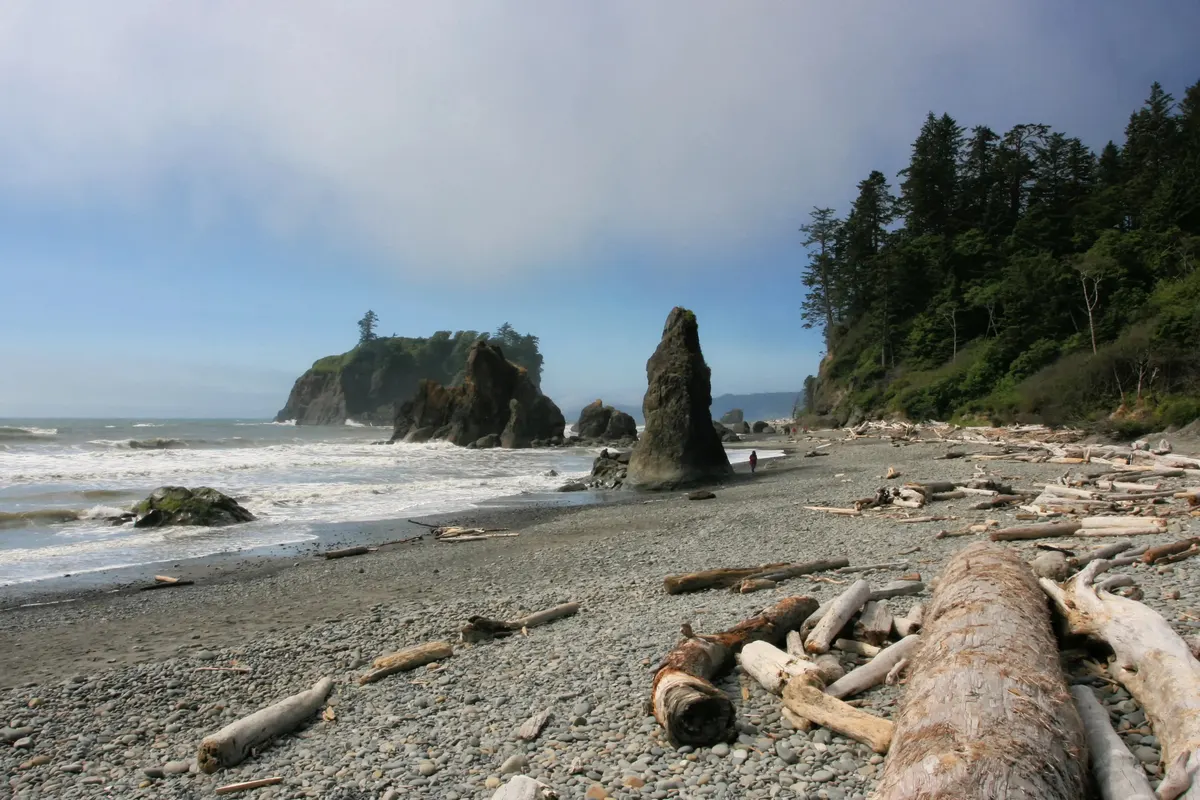
Olympic on Washington's Olympic Peninsula offers three different worlds in one park: glacier-capped mountains, a wet temperate rainforest and a wild Pacific coastline. Moss hangs from the trees in the Hoh Rain Forest, and sea stacks line the beaches. Roosevelt elk roam the valleys.
It became a national monument in 1909 and a national park in 1938. The Quinault, Hoh, Makah, Quileute and other peoples have homelands in and around the park. It's also a World Heritage Site.
Olympic National Park is a national park in Washington. The National Park Service places its center at 47.80 degrees north and 123.67 degrees west, and the sky calculations on this page use that point. Visitor information, fees and alerts are on the park's own page. National Park Service (opens in a new tab).
How Olympic National Park compares
Its best monthly core score of 21 ranks 50 of 54 national park units that can see the core. The highest is Lassen Volcanic National Park at 86, and the lowest is Voyageurs National Park at 13. Cloud at Olympic National Park runs from 46% in July to 80% in January.
The score ranks months and parks. It isn't a forecast for any night, and it leaves out local weather, smoke and light from nearby towns. How the core score works.
How dark is the sky?
The Park Service models how much artificial light brightens the sky across the lower 48. At the point used for Olympic National Park, it puts the added glow at about 38% of the natural brightness of a moonless sky (a ratio of 0.376). That makes it 28th darkest of the 47 parks it covers. Lower is darker. This is a model, not a reading taken at the park, and it describes one point, so the edges of a large park can differ.
Questions people ask
When is the best time to see the Milky Way at Olympic National Park?
June, July and August are the best months. The best week of 2027 is July 1 to 7.
Can you see the Milky Way at Olympic National Park all year?
The core clears 10 degrees during full darkness on most nights from April to August. In January, February, March, September, October, November and December it's out of reach, either too close to the Sun or too low in the dark.
How dark is the sky at Olympic National Park?
The Park Service models how much artificial light brightens the sky across the lower 48. At the point used for Olympic National Park, it puts the added glow at about 38% of the natural brightness of a moonless sky (a ratio of 0.376). That makes it 28th darkest of the 47 parks it covers. Lower is darker. This is a model, not a reading taken at the park, and it describes one point, so the edges of a large park can differ.
Does the moon matter at Olympic National Park?
Yes. A bright moon hides the Milky Way. The best night in July is July 1, when the moon is 5% lit and the core is above 10 degrees from 12:24 am to 1:54 am.
Wilderness and weather
Olympic has a built-in advantage. The Park Service says 95 percent of the park is designated wilderness, with little human-caused light. It also has cloud to contend with.
Our cloud data average 68 percent over the year, ranging from 46 percent in July to 80 percent in January. The Park Service agrees the warm summer months bring drier weather to the Olympic Peninsula, so summer is the likelier season for clear nights.
Where to look
The Hurricane Ridge Astronomy Program is free, led by a Master Observer, and offered when the weather allows during prime summer viewing times. Check the calendar or the summer Bugler newspaper for dates. The Service suggests you spend an evening on a mountain peak, along the coast or at your campsite. Neighbouring options are North Cascades and Mount Rainier.
How it fits our numbers
In our 2027 numbers, Olympic peaks in July with a core score of 21 out of 100. The best week is July 1 to 7, with about 1.6 moon-free hours a night and average cloud near 46 percent. The Hurricane Ridge program is weather dependent, so a good score doesn't guarantee a clear night. Across the year the core clears 10 degrees in full darkness on 168 nights, and the clear ones are most likely when the summer drier weather the Park Service describes arrives. Hurricane Ridge is the place the free program runs, so it's also the easiest place to ask a Master Observer for help.