The core clears 10 degrees during full darkness on most nights from January to November. In December it's out of reach, either too close to the Sun or too low in the dark.
Core score by month
| Month | Core score | Best week | Moon-free core hours a night | Average cloud |
|---|---|---|---|---|
| January | 1 | January 13 to 19 | 0.2 | 77% |
| February | 13 | February 10 to 16 | 2.3 | 78% |
| March | 30 | March 9 to 15 | 4.3 | 70% |
| April | 35 | April 5 to 11 | 6.0 | 65% |
| May | 38 | May 3 to 9 | 7.8 | 62% |
| June | 40 | June 1 to 7 | 9.4 | 60% |
| July | 42 | July 1 to 7 | 8.9 | 58% |
| August | 45 | August 25 to 31 | 6.0 | 55% |
| September | 45 | September 21 to 27 | 4.2 | 55% |
| October | 21 | October 18 to 24 | 2.2 | 61% |
| November | 2 | November 14 to 20 | 0.3 | 70% |
| December | 0 | Core not visible | 0 | 75% |
Times are for the best seven nights in each month. Moon-free means the moon is below the horizon. The core counts as visible above 10 degrees in full darkness, when the Sun is more than 18 degrees below the horizon.
The best nights in 2027
- July: July 1 is the best night. The core is above 10 degrees and the moon is down from 7:19 pm to 5:09 am, with the moon 4% lit that night.
- August: August 25 is the best night. The core is above 10 degrees and the moon is down from 7:29 pm to 1:29 am, with the moon 35% lit that night.
- September: September 21 is the best night. The core is above 10 degrees and the moon is down from 7:29 pm to 11:39 pm, with the moon 61% lit that night.
Clock times are Samoa time, which doesn't observe daylight saving. The best nights fall around the new moon, so the dates shift by about 11 days each year.
About the National Park of American Samoa
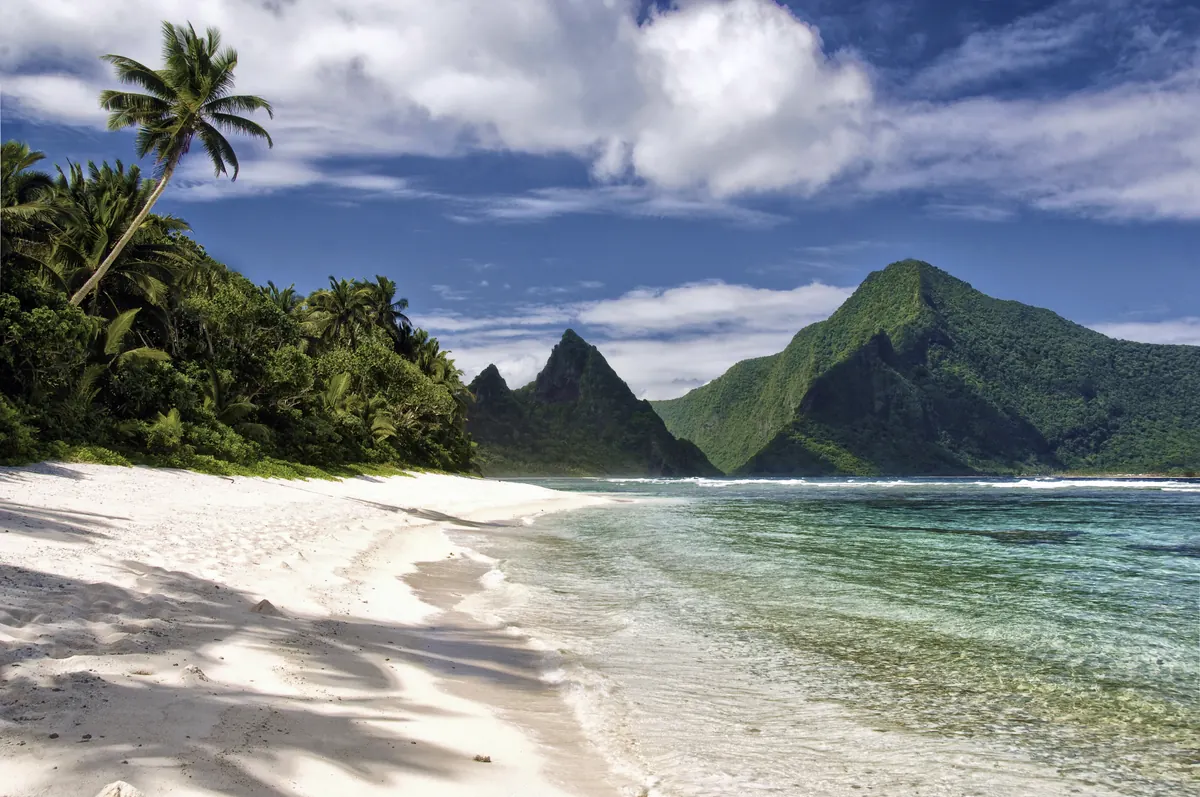
The National Park of American Samoa is spread across three islands in the South Pacific: Tutuila, Ofu and Ta'u. It's a place of steep rainforest ridges, coral reefs, and flying foxes, the large fruit bats of the islands.
The park was authorized in 1988. Instead of buying land, the Park Service leases it from Samoan village councils under a 50-year lease signed in 1993, and the villages keep their traditional ownership and way of life. That arrangement is unusual in the national park system.
National Park of American Samoa is a national park in American Samoa. The National Park Service places its center at 14.23 degrees south and 169.85 degrees west, and the sky calculations on this page use that point. Visitor information, fees and alerts are on the park's own page. National Park Service (opens in a new tab).
How the National Park of American Samoa compares
Its best monthly core score of 45 ranks 40 of 54 national park units that can see the core. The highest is Lassen Volcanic National Park at 86, and the lowest is Voyageurs National Park at 13. Cloud at National Park of American Samoa runs from 55% in August to 78% in February.
The score ranks months and parks. It isn't a forecast for any night, and it leaves out local weather, smoke and light from nearby towns. How the core score works.
How dark is the sky?
The Park Service's sky model covers only the contiguous United States and has no value at the reference point used for National Park of American Samoa, which is outside its coverage or over water, so no sky darkness figure is shown here.
Questions people ask
When is the best time to see the Milky Way at the National Park of American Samoa?
July, August and September are the best months. The best week of 2027 is August 25 to 31.
Can you see the Milky Way at the National Park of American Samoa all year?
The core clears 10 degrees during full darkness on most nights from January to November. In December it's out of reach, either too close to the Sun or too low in the dark.
How dark is the sky at the National Park of American Samoa?
The Park Service's sky model covers only the contiguous United States and has no value at the reference point used for National Park of American Samoa, which is outside its coverage or over water, so no sky darkness figure is shown here.
Does the moon matter at the National Park of American Samoa?
Yes. A bright moon hides the Milky Way. The best night in August is August 25, when the moon is 35% lit and the core is above 10 degrees from 7:29 pm to 1:29 am.